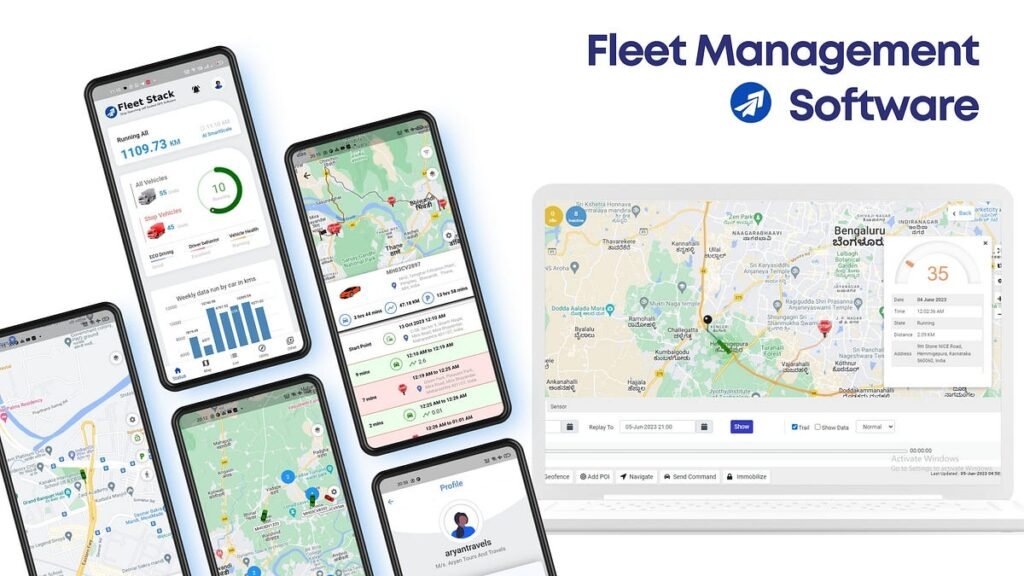
Running a delivery business without a fleet management app is like driving blindfolded. You’re guessing at routes, making educated guesses about delivery times, and hoping your drivers are actually on track. A dedicated fleet management app transforms chaos into a well‑oiled machine, optimizing every mile driven and dollar spent.
This is a practical guide for delivery business owners who know they need a fleet management app but are unsure where to start. By the end, you’ll understand how to build an app that boosts efficiency, cuts costs, and keeps customers happy.
Why You Need a Fleet Management App (Not Just a GPS Tracker)
First, let’s clarify what a fleet management app is and what it is not.
A GPS tracking app is a single feature. A fleet management app is a centralized operational hub that integrates:
- real‑time tracking
- intelligent routing
- maintenance logging
- fuel expense tracking
- driver scheduling
- customer communication
A well‑architected fleet app management system can reduce operational friction across your entire delivery chain. If you want to explore how this works at scale, see our guide on designing scalable fleet management app architecture with real‑time tracking.
Step 1: Define Your Delivery Workflow
Before you can build an app, you need to map your current delivery workflow. Ask these questions:
- Where do orders originate?
- Who assigns orders to drivers?
- How do you track delivery status?
- What data is most important to track?
- What are your biggest pain points?
Write down each step from order received to proof‑of‑delivery. This will become the blueprint for your fleet management app.
A smooth workflow can be reflected in both the fleet app management layer and the underlying custom mobile app development that powers your driver and admin interfaces. For more on how to structure this, check out our custom mobile app development services and mobile app development services overview.
Step 2: Identify the Core Features Your App Needs
Not every feature is essential in an MVP. For a delivery business, these are the must‑have features:
Real‑Time Driver Tracking
This is non‑negotiable. The app must show the real‑time location of every driver on a map. You need this:
- while planning routes
- When a customer calls about a late delivery
- when dispatching a new order
Many modern fleet management app platforms use geolocation and map APIs to deliver this experience. For a deeper look at mobile‑side architecture, see our guide to scalable Android app development and full‑stack mobile app agency overview.
Intelligent Route Optimization
This is where most delivery businesses lose time. A fleet app management system should calculate the most efficient route for all deliveries, not just the fastest single‑stop path.
Advanced platforms mix AI‑driven routing with live traffic data. If you want to see how AI can power such logic, read our AI app development services, AI automation, and 5G mobile development articles.
Dynamic Dispatch System
This is the “brain” of your fleet management app. It takes incoming orders and assigns them to the most suitable driver automatically.
When designing this dispatch logic, you can also scope a minimum viable product (MVP) that focuses on core routing and dispatch. For help framing this, see our posts on how to scope an MVP that actually solves a problem and MVP vs full product: what to build first.
Proof of Delivery (POD)
Every delivery needs proof. This is crucial for disputes, quality control, and performance tracking.
A fleet app management system can capture signatures, photos, and notes directly from the driver’s device. For a more general discussion on end‑to‑end digital product thinking, see our product strategy framework for PE firms.
Driver Communication Toolbox
Your fleet management app should be the only communication channel between you and your drivers.
Well‑built apps also benefit from strong UX patterns. For best‑practice guidance, read our piece on what great UI/UX looks like in 2025 and how it drives ROI and our UI/UX design for responsive web and mobile apps.
Driver Scheduling and Time Tracking
This is essential if you have multiple drivers or part‑time staff.
When integrating this into your fleet app management stack, you often need a backend that can sync with HR or payroll tools. For architectural patterns that support this, see our custom mobile app development for enterprises and advanced SaaS platform development framework.
Analytics and Reporting
Without data, you’re guessing. A fleet management app should provide real‑time analytics on:
- average delivery time
- total miles driven
- fuel consumed
- on‑time delivery rate
If you want to explore how analytics and experimentation fit into digital products, check our Mastering A/B testing in digital marketing and analysis of leading industries in Mobile App Development in 2026.
Step 3: Decide on Your Tech Stack
You don’t need to build everything from scratch. A fleet management app can integrate with existing systems via APIs.
- Mobile app: Flutter or React Native for cross‑platform coverage, built via a custom mobile app development team.
- Web admin panel: A responsive dashboard for dispatchers and managers.
- API layer: To connect your fleet app management logic with warehouse, POS, or CRM systems.
For guidance on assembling a capable team, see our mobile app development team and choosing a software development partner without regrets.
Step 4: Build the MVP (Minimum Viable Product)
Start with an MVP that includes:
- real‑time tracking
- basic routing
- dispatch
- proof‑of‑delivery capture
- simple analytics dashboard
An MVP lets you test your fleet management app with real drivers before investing heavily in advanced features. For more on how to structure this, see our MVP app development services, build your app MVP, and I want an app but don’t know how to start guides.
Building a fleet app management MVP is also a good way to stress‑test your architecture; our scalable mobile game development architecture article shares similar patterns for real‑time systems.
Step 5: Choose a Development Partner
If you don’t want to build everything in‑house, consider a fleet management app development partner with experience in logistics and delivery apps.
At Pixact Technologies, we offer fleet app management and custom fleet management app development services in the USA that cover everything from real‑time tracking to maintenance and analytics. Our AI app development and enterprise AI software development capabilities can power advanced routing and optimization within your fleet app management platform.
For a broader view of how AI, blockchain, and cloud‑native patterns can fit into your app, see our integrating AI, blockchain, and cloud‑native custom fintech mobile app development post.
Step 6: Launch and Iterate
Once your fleet management app is live, monitor:
- driver feedback
- app performance
- delivery times
- customer satisfaction
Use this data to add features like predictive maintenance, driver performance scoring, or advanced routing algorithms. As your app evolves, you may also want to refine budgets and expectations; our guide to evaluating mobile app costs in 2026, when AI can build apps for free, can help frame that conversation.
The Final Verdict!
Building a fleet management app for your delivery business is not a luxury. It’s essential for staying competitive, cutting costs, and improving the customer experience. A well‑designed fleet app management system can give you a clear view of every delivery, every mile, and every driver.
If you’re ready to build a fleet management app or fleet app management platform for your delivery business, the best first step is to define your workflow, identify your must‑have features, and choose a development partner with experience in fleet management app development and custom mobile app development.
You can learn more about our fleet app management and fleet management app development offerings, or explore related topics such as scalable Android app development, AI app development, and full‑stack mobile app services to help you plan your next move.