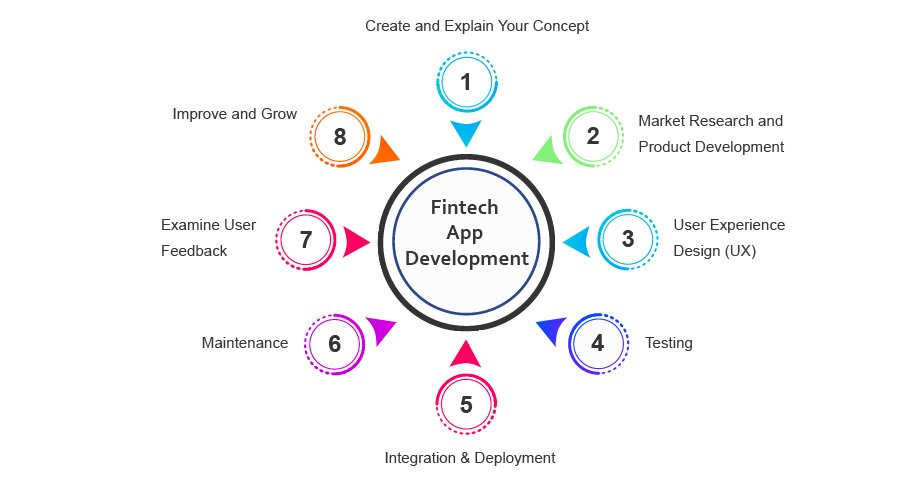
The landscape of global finance is shifting. As we move through 2026, the demand for real-time forex trading app development has reached an all-time high, driven by a surge in retail trading and the integration of Agentic AI fintech agents. To succeed in this competitive vertical, brokers and financial institutions can no longer rely on rigid, monolithic systems.
Building a platform that handles trillions in daily volume requires a shift toward scalable fintech app development models. Whether you are a startup looking for the best forex trading app developers 2026 or an established brokerage seeking custom trading software development, understanding the architectural blueprint of success is vital.
The Shift to Modular & Cloud-Native Architectures
The era of “all-in-one” software is over. Modern forex trading platform development now favors a modular fintech app architecture. This approach allows developers to isolate specific functions, like price feeds, order execution, and user management, into independent services.
Why Microservices?
Using a microservices fintech backend development strategy ensures that if the “news feed” service spikes in traffic during a major economic announcement, it won’t crash the “order execution” engine. By leveraging Kubernetes in FinTech trading apps, developers can automatically scale specific containers to meet real-time demand, ensuring a low-latency forex trading system architecture.
Comparison: Custom Development vs. Composable API Models
For those deciding between building from scratch or using pre-integrated blocks, the following table breaks down the two most popular fintech app development models in 2026.
| Feature | Custom Fintech Development | Composable API Model (FaaS) |
| Time to Market | 9–14 Months | 3–5 Months MVP Development |
| Scalability | High (Custom-tuned) | Exceptional (Elastic scaling) |
| Initial Cost | High Capital Investment | Low (Pay-as-you-go) |
| Flexibility | Total Control | Limited by the API Provider |
| Compliance | Manual Integration | Built-in (RegTech) Healthtech Compliance |
| Best For | Tier-1 Institutions | Fintech Startups & Neobanks |
How to Build a Scalable Forex Trading App with Real-Time Data
A common question in the industry is: “How to ensure high performance in forex app development?” The answer lies in the tech stack and the data streaming model.
For real-time data streaming in fintech development, the gold standard is to use GoLang or Node.js (TypeScript) for the backend. These languages are designed for high-concurrency environments. When paired with time-series databases like InfluxDB, the platform can process millions of “ticks” (price changes) per second without lag.
The Role of Infrastructure
A cloud-native banking app development mindset is essential. Utilizing Microsoft Azure or AWS allows for global distribution. For example, if you are targeting regulated forex app development, you can host your execution servers in the region to minimize physical distance and latency for local traders.
Regulatory Requirements and Security in 2026
You cannot discuss fintech app development services without addressing security. In 2026, compliance-first fintech development is the only way to avoid heavy fines. This includes:
- KYC/AML Automation: Integrating AI-driven identity verification, AI App Development
- Zero Trust Fintech Security: Ensuring every API call is authenticated and authorized
- ISO 20022 Payment Standards: Adhering to the new global standard for financial messaging
For companies operating across borders, such as those seeking US market fintech compliance or EU Open Banking PSD3 solutions, building a secure forex CRM and trading app integration is a non-negotiable priority. Secure Coding Standards!
Regional Trends
The demand for custom fintech solutions remains steady, but we are seeing explosive growth in emerging markets. Top fintech app developers are currently focusing on tokenized real-world assets (RWA), while forex brokerage software development is prioritizing mobile-first, low-bandwidth interfaces for rural accessibility.
To capture these markets, cross-platform mobile app development for forex traders using frameworks like Flutter or React Native is recommended. This allows for a single codebase to serve both iOS and Android users, significantly reducing maintenance costs for iOS App Development.
Advanced Features: Social Trading & HFT
In 2026, a basic trading interface isn’t enough. The top 10 forex trading platforms (2026) all share a few “must-have” features:
- Social & Copy Trading Integration: Allowing beginners to follow the trades of experts
- High-Frequency Trading (HFT) Platform Development: For institutional-grade speed
- Advanced Features of MT5 Trading Apps: Integrating MetaTrader 5 via APIs to offer a familiar environment with custom enhancements
Tech Stack for High-Growth Trading Apps
| Component | Recommended Technology | Why it Ranks in 2026 |
| Backend | GoLang / .NET (C#) | Unmatched execution speed for HFT |
| Database | PostgreSQL + InfluxDB | Combines relational data with high-speed ticks |
| Containerization | Docker & Kubernetes | Essential for modular scaling Enterprise Development |
| Real-Time Data | WebSockets / Kafka | Low-latency bi-directional communication |
| Compliance | RegTech APIs | Automates GDPR, KYC, and AML in real-time |
Conclusion: Partnering for Success
Choosing the right B2B fintech app development partners in 2026 is the most critical decision a broker will make. The difference between a platform that crashes during market volatility and one that scales seamlessly lies in the architecture. By embracing microservices, API-first finance, and cloud-native strategies, your platform will be ready for the future of global trading.
Whether you are launching a white-label FX trading platform development project or a bespoke wealthtech robo-advisor, focus on scalability from day one. And, Build your MVP!
Frequently Asked Questions (FAQs)
What is the most scalable fintech app model in 2026?
The most scalable model is the Microservices Architecture paired with Cloud-Native Infrastructure. This allows individual components of the app (like the trade engine and the payment gateway) to scale independently using Kubernetes, ensuring the platform remains stable during high-traffic events.
How to build a compliant fintech app using microservices?
Compliance is achieved by integrating a dedicated RegTech service within your microservices mesh. This service handles KYC/AML automation and GDPR data privacy checks at every entry point of the application, ensuring that every transaction meets regional regulatory standards automatically
What are the best technology stacks for fintech trading apps?
For high-performance trading, a combination of GoLang or C# for the backend, InfluxDB for time-series price data, and React Native for cross-platform mobile frontend is considered the industry gold standard in 2026
Difference between custom and white-label fintech development?
Custom development offers total control, unique branding, and specialized features, making it ideal for large brokers. White-label development is a pre-built solution that allows for a faster launch (often within weeks) but offers less flexibility in terms of unique architectural changes
How to ensure high performance in forex app development?
High performance is ensured by minimizing latency through WebSockets for data delivery, using low-latency backend languages, and deploying servers in proximity to major financial hubs to reduce “ping” times.
Ready to Build the Future of Finance?
Don’t let legacy systems hold your brokerage back. At the intersection of innovation and reliability, Pixact Technologies team specializes in scalable fintech app development tailored for the high-stakes world of Forex. From low-latency architecture to AI-driven compliance, we provide the technical backbone you need to dominate the 2026 market. Contact our expert fintech developers today for a comprehensive consultation, and let’s turn your vision into a high-performance trading reality.